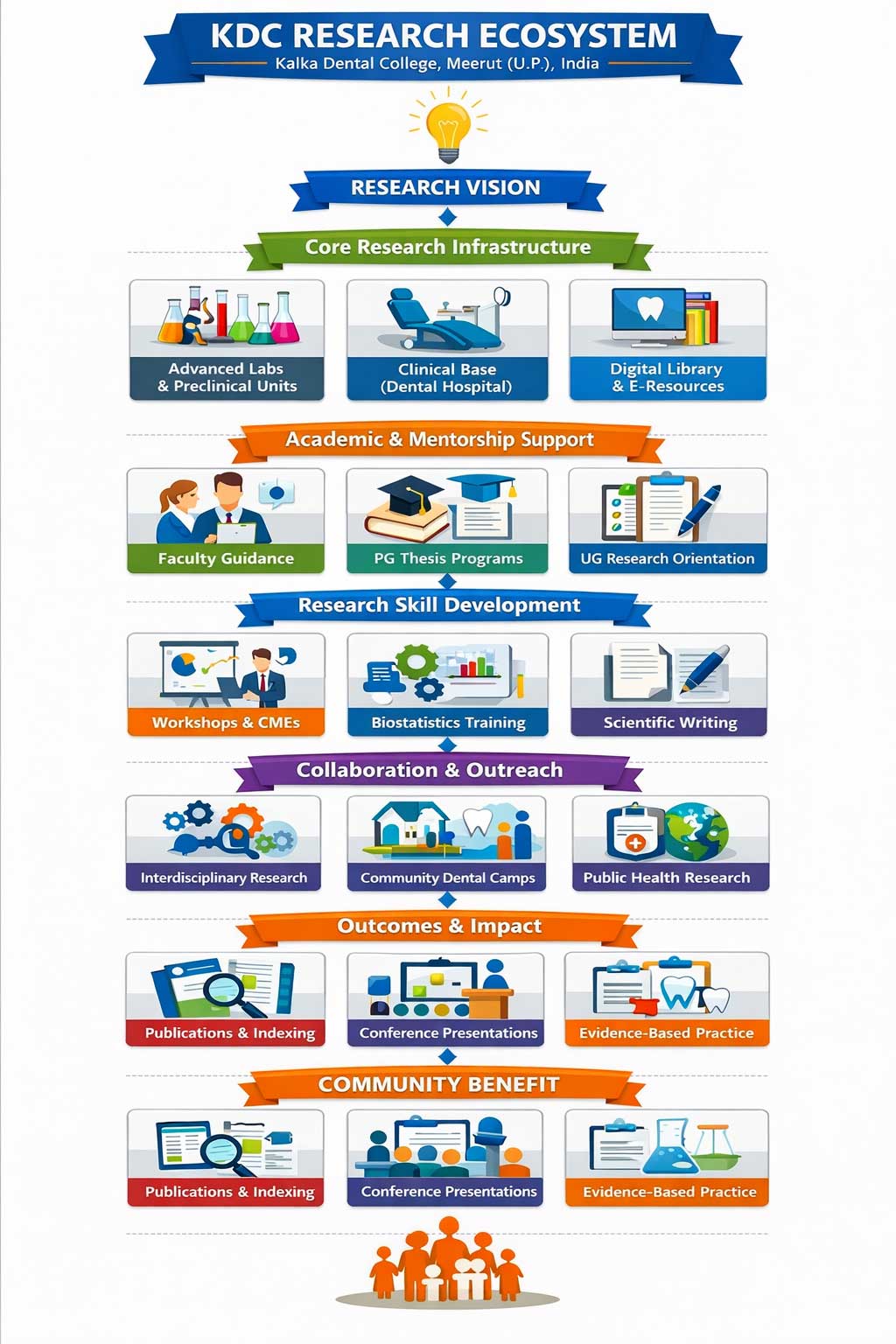
At Kalka Dental College (KDC), research is cultivated as a dynamic ecosystem where infrastructure, mentorship, clinical exposure, and innovation converge to create meaningful scientific outcomes. The institution has developed an integrated research framework that nurtures curiosity, analytical thinking, and evidence-based practice among students and faculty.
-
KDC operates under a well-defined research governance structure that ensures ethical compliance, academic integrity, and quality assurance. Research activities are aligned with regulatory norms and institutional guidelines, promoting responsible conduct and transparency.
-
The college houses advanced pre-clinical and specialty laboratories equipped to support experimental studies, biomaterial testing, microbiological investigations, and histopathological analysis. These facilities allow students to translate theoretical knowledge into practical scientific exploration.
-
With a multi-specialty teaching hospital attached to the campus, the research ecosystem extends into real-time patient care. A diverse patient inflow enables clinical trials, case-control studies, epidemiological research, and outcome-based treatment evaluation across all dental specialties.
-
The central library and digital resource center provide access to national and international journals, research databases, e-books, and reference materials. ICT-enabled learning spaces facilitate literature review, data analysis, and scholarly writing, ensuring global research connectivity.
-
A strong mentorship culture forms the backbone of the research ecosystem. Undergraduate students are introduced to research methodology early in their academic journey, while postgraduate scholars undertake thesis-driven research under expert supervision. Workshops on biostatistics, scientific writing, and evidence-based dentistry strengthen research competency.
-
KDC promotes interdisciplinary collaboration among clinical and non-clinical departments to foster integrated research solutions. Community outreach programs further extend research activities into public health domains, enabling data-driven preventive strategies.
-
Regular seminars, conferences, and scientific presentations provide platforms for dissemination of research findings. The institution encourages publications in indexed journals and participation in academic forums, cultivating a culture of innovation and scholarly contribution.